
Dental Implants vs Bridges: Which Is Better for Missing Teeth?
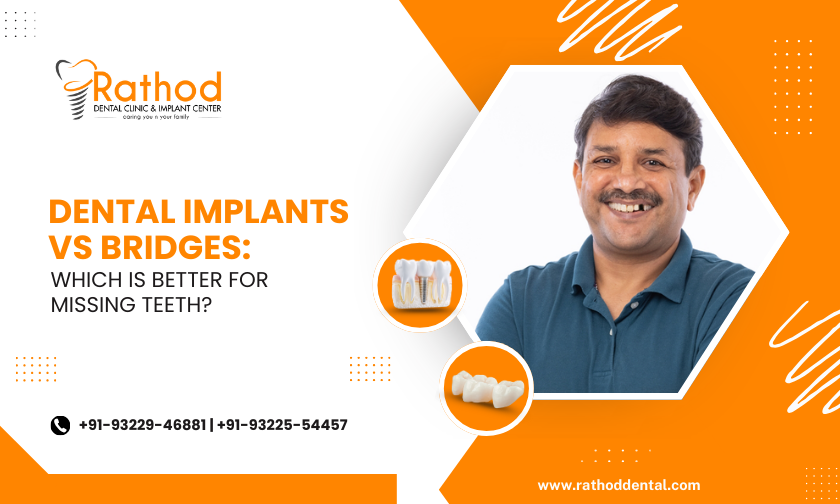
Losing a tooth isn’t just a “dental issue”, it becomes this tiny-but-annoying reminder that something feels incomplete. Whether it happened because of decay, injury, or just a long overdue dental visit, the gap manages to affect how you eat, smile, laugh, and even talk.
And then begins the real confusion:
“Should I get a bridge?”
“Are dental implants too much?”
“Which one lasts longer?”
“Will it look natural?”
“Will it feel weird?”
If these questions are familiar, you’re in the same situation many people face—especially when exploring options like dental implants in Badlapur or considering bridges.
At Rathod Dental Clinic, we meet many people facing this same decision, and trust us, it’s not as complicated as it feels. Both bridges and implants have their strengths, but the right choice depends on what your mouth needs, what you’re comfortable with, and what’s best for the long run.
What Happens When You Don’t Replace a Missing Tooth?
A missing tooth doesn’t just stay missing—your mouth starts adjusting around it, and not in a good way.
Here’s what usually happens:
1. Neighbouring teeth start shifting
2. Your bite changes
3. Food gets stuck in the gap
4. Chewing becomes uneven
5. Jawbone starts shrinking
6. Your facial structure may change over time
7. Gum issues develop more easily
In short: ignoring the gap is like ignoring a loose tile in your house—it will cause bigger trouble later.
Dental Implants: What Are They Really?
Dental implants are the modern, stable, long-term upgrade for missing teeth. A strong titanium screw is placed inside the jawbone, acting as an artificial root. Once healed, a crown is placed on top.
It acts like your real tooth. Feels like your real tooth. Looks like your real tooth.
At Rathod Dental Clinic, many patients say, “Why didn’t I do this earlier?”
Dental Bridges: A Classic, Common Option
A dental bridge “bridges” the gap between two teeth. Neighbouring teeth are trimmed slightly to support a 3-tooth unit where the middle one replaces the missing tooth.
Bridges work well and look natural, but they rely heavily on the support of neighbouring teeth.
Dental Implants vs Bridges — Key Differences You Should Know
1. Impact on Neighbouring Teeth
Implants: No other tooth is touched. Works independently.
Bridges: Neighbouring teeth must be shaped, even if they are healthy.
2. Longevity and Durability
Implants: Strong, long-lasting, and fuse with bone.
Bridges: Depend on the health of supporting teeth and gums.
3. Comfort and Natural Feel
Implants: Feel like real teeth because they are rooted in bone.
Bridges: Comfortable, but not root-supported.
4. Jawbone Health
Implants: Prevent bone loss and maintain facial structure.
Bridges: Do not support the bone underneath.
5. Oral Hygiene
Implants: Clean like normal teeth.
Bridges: Need special cleaning tools under the middle tooth.
6. Overall Appearance
Both options can look natural, but implants often appear more seamless.
Real-Life Scenarios to Help You Decide
Scenario 1: Neighbouring teeth are healthy → Implant is better.
Scenario 2: Neighbouring teeth need crowns → Bridge works well.
Scenario 3: Want maximum longevity → Implant wins.
Scenario 4: Want a faster solution → Bridge is quicker.
Scenario 5: Concerned about bone loss → Implant is the only option.
Pro Tips from Rathod Dental Clinic
1. Don’t delay replacing a missing tooth.
2. If you're young, implants offer long-term value.
3. Always get a proper evaluation—bone levels matter.
4. Maintenance decides longevity.
5. Choose comfort over trend.
Why Many People Prefer Implants Today
Implants feel natural, don’t affect other teeth, last long, look real, protect jawbone, and require no special cleaning.
Why Bridges Still Have Their Place
Bridges are ideal when you want faster results, when neighbouring teeth need treatment, when bone is insufficient for implants, or when medical conditions prevent implant surgery.
Long-Term Maintenance: What You Need to Know
Caring for Implants
1. Brush twice daily
2. Floss normally
3. Regular cleanings
4. Avoid biting very hard items
Caring for Bridges
1. Clean under the bridge
2. Use interdental brushes or floss threaders
3. Maintain gum health
4. Prevent decay on supporting teeth
Ready to Replace That Missing Tooth with Confidence?
If you’re comparing bridges with dental implants in Badlapur, get a professional evaluation that considers your bone levels, bite pattern, gum health, and comfort.
At Rathod Dental Clinic, we guide you step-by-step so you can choose what truly fits your smile long-term.
Whether you choose an implant or bridge, the goal remains the same: a strong bite, a natural smile, and effortless comfort.
Book your consultation today and take the first step toward restoring your confidence.